Hi & Welcome!
Thanks for Being Here.For anyone interested in scheduling, please be aware that I currently have a limited number of openings available on certain days. This is a solo practice, and I have no intention of maintaining a busy or restless schedule.At its foundation, this offering is about learning to genuinely connect through conversation while developing clarity with spoken English. It is for English practitioners who would like to strengthen their language skills through authentic, mindful interaction.I’m currently bringing together various skills, experiences, and approaches with an emphasis on creating long-term, steady engagement and meaningful contributions. The Language Practice is simply one of my current developments within this evolving and broader process.I’m allowing everything to unfold patiently and organically, without approaching this as a commercialized practice.This is a quiet space for people who appreciate presence, conscientious interaction, clear communication, and a direct approach to learning.Feel free to explore the site and send a message if you have any questions!
Introduction & Overview
An integrative and unconventional approach to English language practice through collaborative inquiry and exploration.This simply means being able to ask meaningful questions and engage with English in a way that feels natural and true within your own learning and discovery process.I don't assume the role of your teacher, expert, or authority on your life. I walk alongside, sharing what I've learned through different forms of training and education and what I have integrated through lived experience. The practice allows for both structure and spontaneity, while leaving space for autonomy, curiosity, and your own way of learning.Many people have been taught through rigid programs and scripts that are unnatural or unnecessarily restrictive.Beyond memorizing vocabulary and grammar, I see language and skillful communication as ways to develop awareness, connection, and clarity within our human capacities, both in our inner lives and in everyday contexts.After completing language courses and observing learners across online platforms, I came to see that language cannot be confined to a standardized model or a limited view of learning.With careful contemplation, I've also discerned that the global marketplace, social narratives, and mainstream educational systems have their share of major issues.Language can be used to manipulate perceptions for business appearances or entertainment purposes, or it can facilitate clear seeing, honest communication, and genuine understanding that supports human well-being.I created this space simply to share what I have unearthed through a personal process of deconstruction, including what I have come to understand about the possibilities of language when the mind is trained, the senses are restrained, and the heart is cultivated.Developing communication skills also calls attention to the conditions from which language arises...environment, mind, heart, attention, and lived experience.Please keep in mind that this space is not dogmatic or centered around commercialized education. It is a free-thinking, evolving, and deeply authentic expression of the courage to step outside the crowds, while still sharing skills, talents, and wisdom with anyone open to a fresh way of engaging with English.Resources and sessions explore how English can be practiced through ethical communication, authentic conversation, and relational respect.Thanks for reading this intro and would like to note that I don't use AI for content or outsource anything, as this is a solo practice and being developed for quality connection, not quantity sales.I trust that whoever aligns with offerings, will find their way here.Respectfully,Anaeli Sofía
Language Practice
The Language Practice draws from several approaches to language teaching. These are not rigid methods or formulas. They are ways of creating a space where English can be practiced through real communication and direct experience.DOGME-INSPIRED / CONVERSATION-LEDReal conversation becomes part of the learning material rather than relying heavily on predetermined textbook content. Useful language can arise naturally from what you are actually saying and trying to express.EMBODIED LANGUAGE PRACTICEAttention is given not only to vocabulary and grammar, but to how language is experienced through speaking, listening, hesitation, rhythm, tone, and response.EXPERIENTIAL LEARNINGLanguage is approached as something to use and encounter, rather than something to memorize in isolation. We work with language as it appears in real communication.EMERGENT LANGUAGEUseful vocabulary, grammar, pronunciation, and expressions can arise naturally from your own speech, questions, interests, and experiences.COMMUNICATIVE LANGUAGE PRACTICEThe focus is on actually communicating. You have space to speak, listen, clarify, ask questions, and find your own way of expressing something.CONSCIOUS COMMUNICATIONWe notice how words are chosen, how meaning changes with context, and how communication actually unfolds between people.LEARNER-CENTEREDThe practice responds to you rather than following a fixed script. Your existing knowledge, interests, questions, and way of communicating become part of the learning process.CONTEMPLATIVE-INFORMEDA steady, attentive quality is brought to the learning process. This is not a spiritual or therapeutic practice, but simply an invitation to slow down enough to notice language as it is being used.LESS PERFORMANCE, MORE PRACTICEThere is no need to constantly demonstrate progress or perform what you have learned. The focus is on actually using English, noticing what is happening, and developing through practice.My role is not simply to provide information, but to create a free space for language to be practiced, noticed, clarified, and developed.The aim is simple - to create a steady, attentive space where English can be practiced honestly, naturally, and with increasing ease.
Sessions Available For...
English language learners who already have a foundational understanding of grammar and sentence structure and are seeking conversational practice and attentive communication guidance.
Experiential & Collaborative
Sessions are created around your current English level, intentions, and areas you would like to develop and strengthen.Conversation skills remain at the center of our practice collaboration with nuanced and insightful feedback is given throughout, without it feeling like classroom instruction or rigid linear model.We don't move through a conventional curriculum, giving attention to the areas most relevant to you and returning to them naturally through conversation and real-time practice.
Stress-Free & Compassionate
Speaking a language that is not your first can feel different from understanding it on the page. You may know what you want to say, yet find that speaking, listening, or responding in the moment takes time.The Language Practice offers spacious time to speak, listen, and communicate in English through in-the-moment conversation.Sessions provide a quiet, judgment-free space where you do not need to perform or have everything right. You are welcome to pause, ask questions, make mistakes, try again, and take your time finding the words you want to say.
Offering
Included● Flexible International Scheduling● Single or Series Sessions with
No Membership Contracts● Conversational English Practice● Wide Perspective with Ethical Awareness● Thorough Feedback● Reflections & Practice Resources● Etymological Insight into the Roots of Language● Share-What-You-Choose AmountChoose the amount that fits your current circumstances. All options receive the same time, practical resources, and quality.Single Session 60 minutes
$40 · $50 · $60Series of 4 Sessions 60 minutes each
$140 · $180 · $220Begin with a conversation about your English, what you would like to practice, and your intentions for practicing overall.From there, we can see whether the sessions align well.
Meet Anaeli
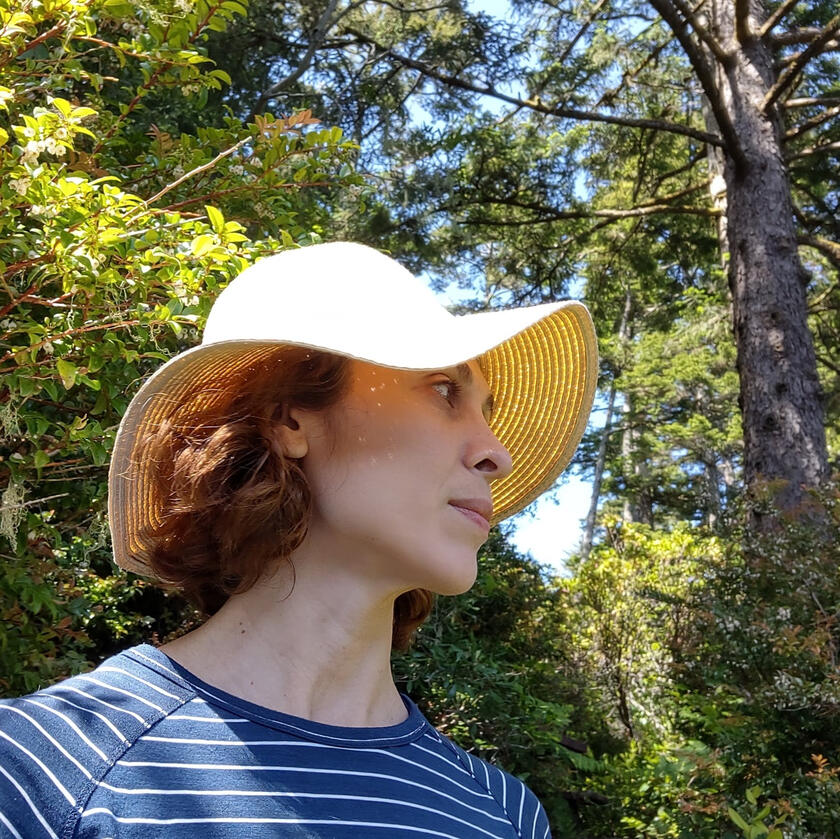
I’m Anaeli.For as long as I can remember, I’ve enjoyed language arts and writing. At a very early age, I expressed deep feelings and inner experiences through writing, in both English and Spanish. I learned this later through letters my mother had saved. Apparently, I had naturally picked up bilingual writing without formal instruction.During a major transition after 2020, I began exploring flexible ways to work online and discovered the field of English teaching. Although my background was primarily in health care and therapeutic work, I remained open to learning, growing, and discovering new pathways.I completed both Level 3 and Level 5 TEFL training, along with additional TESOL certification focused on foundational language instruction. As I was beginning my teaching journey, I joined a teaching marketplace where I had the opportunity to meet and work with people from a wide variety of backgrounds, professions, communication styles, and personal goals.I had the capacity to meet each learner as an individual, adapting to their unique needs, abilities, and learning styles. However, I quickly saw that the company’s framework and rushed expectations did not always allow for the steady pace and natural rhythm that authentic communication requires.Developing language skills involves far more than simply "getting" and retaining information. It requires time for reflection, self-awareness, exploration, practice, and the opportunity to develop a genuine understanding of how language works in real-life contexts. I came to appreciate that meaningful progress happens when learners are given the space and support to engage at a pace that allows for embodied knowing.This experience helped me recognize the importance of creating a learning environment where people have enough space to process what they are learning, connect it to their own lives, and develop confidence through genuine practice. It reinforced the importance of responsive instruction that considers the whole individual rather than relying solely on transactional processes or superficial operating systems.I chose to step away from the marketplace environment so I could dedicate more attention to meeting with people directly. I have intentionally developed a space for thoughtful conversation, depth, and clarity rather than high-volume content, pressured interaction, or confusing activity.Over time, I’ve come to see that genuine learning and living freely come first, rather than being driven by self-gain, extreme performance measures, or stressful competition with others.My approach is centered on authentic relationships, honest communication, and bringing insight, wisdom, and attentive awareness into each meeting.I also have direct experience and a professional background in the therapeutic arts. When requested, I can integrate practical approaches for cultivating greater mental clarity, balance, and calm into everyday life.I’m glad to meet and collaborate with people from all walks of life, and I’m grateful to share a mutually uplifting space where connection and conversation can unfold openly, fearlessly, and beneficially.
Meeting Requests
© 2026 The Language Practice
Anaeli Sofía
All rights reserved.